





|
|
|
|
|
|
||
|
|
|
|
| > My stuff
> The Persuader Blog |
31.1.06 Get your Snakes on a Plane here ‘Damn, motherf***er, what do you mean you’ve misplaced your copy of Lucire?’ Copies of Lucire, the magazine I own, were in the movie Two for the Money, starring Al Pacino.  Our next movie is coming out in August 2006 and I understand (thanks to a post on the meme by Tim Kitchin, which inspired me) that Pacific Air 121, which is what it was called when I signed the documents, will be called Snakes on a Plane (which is what star Samuel L. Jackson reckoned it would be called. And when it comes to a movie title, Samuel L. Jackson has way more clout than me). Our next movie is coming out in August 2006 and I understand (thanks to a post on the meme by Tim Kitchin, which inspired me) that Pacific Air 121, which is what it was called when I signed the documents, will be called Snakes on a Plane (which is what star Samuel L. Jackson reckoned it would be called. And when it comes to a movie title, Samuel L. Jackson has way more clout than me).It’s a rare example of movie honesty. The old title was nondescript, but the plot of Snakes on a Plane is snakes on a plane. Long version: a terrorist unleashes a crate of snakes to eliminate a witness. The witness is on a plane. Or: ‘It’s a title. It’s a concept. It’s a poster and a logline and whatever else you need it to be. It’s perfect. Perfect. It’s the Everlasting Gobstopper of movie titles,’ according to blogger Tongodeon. Or it’s a brand that’s so frank, it’s a relief from all the over-hyped titles out there. Maybe this is what America needs in this era—an ironic dose of postmodernism. But what is odd is the term has gained a life of its own. ‘Snakes on a plane’ has inspired a cartoon, a blog (Snakes on a Blog), a T-shirt, and even one idea that it should be a term that rests somewhere between ‘C’est la vie,’ and ‘Shit happens.’ It’s good old everyday folks doing this—Wikipedia cites a blog from screenwriter Josh Friedman—not Time Warner or New Line, and when the movie plot sounds as silly as this, I’m glad we have the public doing the marketing. I still haven’t seen Two for the Money, since it never got a national release in New Zealand, but if the snakes on a plane term is this much in the public consciousness, I might see this one without having to travel. It also shows that online media and word of mouth (even if virtual) work quite well—something that I had relied on to create my businesses in the first place. It’s been fascinating to see this happen to a term that did not (publicly) exist a year ago, and it’s been built up by bloggers and folks having fun—the citizen media have created this. It could be bigger than Tourist Guy (or the Tourist of Death) in 2001—Time Warner must be worried this is peaking a little too soon. The second mainstream media item has surfaced, at the Toronto Star, after a piece in Wired. Just remember, if you expect Sam and the gang to get rid of the snakes, the solution is to employ the copies of Lucire in the seat pockets on the plane and indulge in Whacking Day. Del.icio.us tags: Snakes on a Plane | word of mouth | citizen media | blogging | vernacular | postmodernism Posted by Jack Yan, 05:53  
Tackling Wal-mart I’m not alone in wishing for changes at Wal-mart. In Social Policy’s fall 2005 issue, there is a series of articles on the company, which, at current trends, can account for over three per cent of the US’s gross domestic product. I’m not alone in wishing for changes at Wal-mart. In Social Policy’s fall 2005 issue, there is a series of articles on the company, which, at current trends, can account for over three per cent of the US’s gross domestic product.The positives of Wal-mart stem from the late Sam Walton himself, and the idea of the American Dream. But the negatives are emerging, even if ‘an estimated 80 percent of American households report shopping there at least once a year and 90% plan to shop there in the future.’ The negatives, however, do not come from Wal-mart’s actions abroad, such as its failure to pledge to pay workers maternity leave in Bangladesh, in defiance of the law. But Americans are concerned about their own: Facts about Wal-Mart’s record are key to opening consumers up to action campaigns and changing their shopping patterns. Our research has shown that certain facts are particularly salient in changing consumers’ perceptions of Wal-Mart. Among these are: —Eliminating U.S. manufacturing jobs —Deliberately limiting employee hours to avoid paying benefits —Discriminating against female employees … However, some facts, while alarming, are also hard for consumers to believe, such as the practice of locking employees in on the night shift. So how much consumer power is needed to change things? I argue it’s happening already. Consumer backlashes in the 1990s hurt the revenues of Levi Strauss and Nike—call it karma, or call it the success of the consumer movement and organizations such as the National Labor Committee. McDonald’s is still reeling from Super Size Me, shown at Sundance in 2004—that has meant that I have not eaten there since that film. Granted, these companies have found ways to bounce back, and Wal-mart probably will, too, but all need to be very aware of how their actions are perceived by the public. If brand equity goes down—and it does when there are misdeeds that affect the existing image negatively—then it actually follows (extending my research) that the customer base will shrink. It’s become very hard to hide these in the 2000s, as word gets out—whether it’s through bloggers (and the term blogging will mainstream in the second world this year) or emailers. Social Policy’s concern is to bridge the digital divide, and argues that the solution is not to collapse the chain. One idea is cited: We should connect this campaign to the broader values debate. Many voters are longing for reconnection to community and some sanctuary from the greed in popular culture. A good example of connecting to this debate is the “Love Your Mom, not Wal-Mart” campaign pledge not to buy gifts for Mother’s Day because of Wal-Mart’s treatment of workers, particularly women. This is a way to link a relatively easy consumer behavior with broader values and to the concerns that the values underlying these holidays have been drowned out by commercialism. We should extend these pledges to other secular holidays. Extending the pledges to religious holidays is also worth exploring as a way to tap into moral and religious values. Others are at the site, though you will need to register. I haven’t yet—there’s a bit more to do here at work to keep my inbox at a reasonable level. But for further reading, surf to the letters’ page at the New York Review of Books here, which extends some of the arguments. Posted by Jack Yan, 04:33
30.1.06 Dr Martin Luther King on branding (sort of)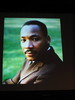 I realize some recent posts have featured quotations from others, but I hope readers will permit me one more that inspired me, which I heard today on the Matrix, a local radio station broadcasting alternative (usually left-wing) politics. Regardless of one’s political bent, the words of Dr Martin Luther King Jr are poignant (my emphasis): I realize some recent posts have featured quotations from others, but I hope readers will permit me one more that inspired me, which I heard today on the Matrix, a local radio station broadcasting alternative (usually left-wing) politics. Regardless of one’s political bent, the words of Dr Martin Luther King Jr are poignant (my emphasis):Increasingly, by choice or by accident, this is the role our nation has taken, the role of those who make peaceful revolution impossible by refusing to give up the privileges and the pleasures that come from the immense profits of overseas’ investments. I am convinced that if we are to get on the right side of the world revolution, we as a nation must undergo a radical revolution of values. We must rapidly begin the shift from a thing-oriented society to a person-oriented society. When machines and computers, profit motives and property rights, are considered more important than people, the giant triplets of racism, extreme materialism, and militarism are incapable of being conquered … A true revolution of values will soon look uneasily on the glaring contrast of poverty and wealth. With righteous indignation, it will look across the seas and see individual capitalists of the west investing huge sums of money in Asia, Africa, and South America, only to take the profits out with no concern for the social betterment of the countries, and say, ‘This is not just …’ While Dr King was speaking of Vietnam, I took these words as particularly relevant in today’s business climate, where some brands are used to fool people. Many countries that exploit, for instance, sweat-shop labour are guilty of the above. Materialism has come before humanity—and sadly, I have noticed this seep through into everyday life in some industrialized countries. When human relationships are worth less than financial ones—something that I experienced with one of our freelancers when a usually acceptable remedy to a mistake we made was not enough—then I have to wonder about dealing with her compatriots. But I do not talk of isolated cases: too many companies have been placing profits before humanity, of money before dignity—and where will that get them? They might argue that it gets them a better share price or a return on investment for stock holders, but financial arguments hold little sway with me. Because in the 21st century, it has become very hard for the following to occur or work and, therefore, a share price to be sustainable if its increase is gained by improper means: (a) advertising convinces people to buy something;I believe that there are enough of us, when well informed, who will look at an organization with indignation when we discover, for example, Wal-mart (and others) refusing to sign a pledge to honour the law in Bangladesh which asks companies to pay maternity leave; and that we will vote with our dollar to spend elsewhere. What is perhaps sad, however, is that Dr King gave his speech 40 years ago, and as a human race we are only just beginning to “get it”. And there are plenty of corporations out there which observe the national holiday in the US, pretending to commemorate the life of a great man, all while going against his very beliefs (universal, one would hope) about human dignity and justice. Del.icio.us tags: branding | brands | sweat shops | Martin Luther King | profiteering | human rights Posted by Jack Yan, 08:08
Designers who blog don’t do commodity logos
I’m really thrilled to be featured today at Cat Morley’s Designers Who Blog, a blog which I have always found valuable because it gives introductions to some great creative minds.
Designers’ work is highly underrated, especially now with spammers going around offering commodity logos. Commodity logos are generally fatal for organizations. Sure, it’s marginally better than having nothing at all—actually, let me think about that. It might be better to have nothing at all. Every logo gives an impression, just as certain musical notes give an impression, or as Times Roman looks different from Arial (I can’t believe I mentioned that typeface in a sentence). A skilled, professional designer will create something that gives the right impression based on the organization’s vision and brand. A commodity designer will be blind to that. So what do you do when you have a commodity logo? Do you bend all your business practices to suit what that logo conveys? That sounds ridiculous to me, and it amazes me that people can be sucked in to them, just because they use words like branding. Commodity logos are not brands. And while some designers aren’t trained in the business case behind branding, my experience is that over 90 per cent are creative people whose expertise in one area translates ably into related ones, be they business thinking or music. Enough ranting. What I wanted to say is that it’s a real honour to be named to Cat’s blog. Since I wasn’t blogging regularly at the time of the passing of my colleague Colin Morley, it’s nice to be able to contribute a thank-you to the clan, even if the two Morleys might not be directly related. Thank you, Cat. Designers Who Blog can be found here. Posted by Jack Yan, 06:42
29.1.06 The top 10 under-reported stories of 2005 Another top 10 list has been brought to my attention: the top 10 under-reported stories of 2005, according to Médécins sans Frontières. The mainstream media have ignored these, for the most part, and the stories have registered only a few minutes the entire year on each of the network news programmes. The cynic in me says that it’s not economically viable to get news crews to these locations given the potential return in viewers. Hence, off to Iraq they all go.
Posted by Jack Yan, 04:01 Another top 10 list has been brought to my attention: the top 10 under-reported stories of 2005, according to Médécins sans Frontières. The mainstream media have ignored these, for the most part, and the stories have registered only a few minutes the entire year on each of the network news programmes. The cynic in me says that it’s not economically viable to get news crews to these locations given the potential return in viewers. Hence, off to Iraq they all go.
Posted by Jack Yan, 04:01
Even the virtual world has borders Google’s decision to censor its results for Red China has been best explained at the if:book blog, where it’s submitted that the internet is not so much a global network, but a virtual representation of the planet’s nation states. It shatters some of the optimism in which the World Wide Web was founded, but it is a force that globalists—or those who support the idea of the web uniting all people as neighbours—need to be aware of: Google’s decision to censor its results for Red China has been best explained at the if:book blog, where it’s submitted that the internet is not so much a global network, but a virtual representation of the planet’s nation states. It shatters some of the optimism in which the World Wide Web was founded, but it is a force that globalists—or those who support the idea of the web uniting all people as neighbours—need to be aware of:As Jack Goldsmith and Timothy Wu explain in an excellent article in Legal Affairs (adapted from their forthcoming book Who Controls the Internet?: Illusions of a Borderless World), China, far from being the boxed-in exception to an otherwise borderless net, is actually just the uglier side of a global reality. The net has been mapped out geographically into “a collection of nation-state networks,” each with its own politics, social mores, and consumer appetites. … The case of Google, while by no means unique, serves well to illustrate how threadbare the illusion of the borderless world has become. The company's famous credo, “don’t be evil,” just doesn’t hold up in the messy, complicated real world. “Choose the lesser evil” might be more appropriate. I still have a lot of sympathy for the view that Google was only after the money—after all, when companies float publicly, a little of their soul is lost. It happened to Yahoo!, and this may be the sign of Google “jumping the shark”. If that is the case, people might now move on to the next brand that helps them unite with the rest of the planet: the desire to network across borders, I believe, is a human trait, not just one of computer geeks. As Ben Vershbow concluded at if:book: Part of us desperately wanted to believe Google’s silly slogans because they said something about the utopian promise of the net. But the net is part of the world, and the world is not so simple. Unless, we make it simple—roll on the next service. I’m going to hold on to that belief as I grow Lucire into print in different nations. Posted by Jack Yan, 02:14
How to restore a workable democracy Simon Anholt has probably become the highest-profile co-author of Beyond Branding, to which I also contributed in 2003. In the latest Time he is quoted in ‘No More Heroes’, a piece on the public’s disappearing trust in political leaders: Simon Anholt has probably become the highest-profile co-author of Beyond Branding, to which I also contributed in 2003. In the latest Time he is quoted in ‘No More Heroes’, a piece on the public’s disappearing trust in political leaders:Simon Anholt, an international consultant who advises political leaders on ways to improve their nations’ brand images, thinks the answer lies in moving away from the current obsession with polls and focus groups. “Most governments provide second-rate customer service rather than leadership,” he says. “Governments are popular when they have real problems and deal with them well.” The article is noteworthy for this other matter, in my view: So what’s the solution? Transparency and a willingness to listen and adapt and help. While November’s unrest and arson attacks affected many suburbs around Paris, the town of Issy-les-Moulineaux to the south of the French capital was largely spared. There, Mayor André Santini has bet heavily on technology infrastructure in a successful bid to attract international firms such as Hewlett-Packard and Cisco Systems. He’s also used technology to interact more openly with Issy’s 63,000 residents. Issy was the first French town to start an Internet-based local TV service, and last December it held an online election for councilors for Issy’s four districts. Candidates campaigned via their own blog pages and discussed issues with voters through the town’s website. Such measures have bolstered Santini’s local support: he won a landslide victory in the last municipal elections. I’m awaiting the first nation that can implement this level of trust and transparency. I suggested it to New Zealand’s Prime Minister, but she passed the matter on to one of her Cabinet members and I never heard more. The United States has the infrastructure, though I doubt it’d be courageous enough. The Swiss are the most likely, in my book, with their binding referenda—but it would be perfect to see it done in a larger nation. Del.icio.us tags: democracy | voting | online voting | trust | transparency | politics Posted by Jack Yan, 01:18
A billion dollars of nothingness Last year, I predicted that AT&T’s new branding campaign would be a billion dollars of nothingness. And if other bloggers are anything to go by, I was right. Last year, I predicted that AT&T’s new branding campaign would be a billion dollars of nothingness. And if other bloggers are anything to go by, I was right.The original quotation about the logo from the CEO was, ‘The revitalized mark symbolizes these attributes—innovation, integrity, quality, reliability and unsurpassed customer care.’ It followed from an equally forgettable quotation about the vision and direction of the merged company. In other words, ‘We have no idea what differentiates us, because every other company says it offers the same.’ That message has been carried forth into its advertising agency and its campaign, so perhaps we should actually be congratulating it for using a billion dollars so closely to the company’s lack of vision? Joseph Jaffe summarizes it well at his blog, highlighting that AT&T, with its ‘Blogging delivered’ billboard, is not even living its brand. The term blogging does not appear at the AT&T site. Posted by Jack Yan, 01:09
28.1.06 Top 10 fastest growing brands online Happy New Year! While we’re on about the top brands of 2005, here’s a list forwarded to me by my colleague Ed Daniel: the top 10 fastest growing brands online, based on unique audience growth. Happy New Year! While we’re on about the top brands of 2005, here’s a list forwarded to me by my colleague Ed Daniel: the top 10 fastest growing brands online, based on unique audience growth.The ubiquity of the web has seen many of these become as popular offline, and is one of the most evident proofs that online brands can create reputations in the “real” world. Blogger, of course, is in there, along with Skype and Wikipedia. I have not, however, heard of Shopzilla, but evidently enough people have to put it in to the number-three slot. Posted by Jack Yan, 23:52
UN to back $100 laptop The United Nations Development Programme will back the $100 laptop for developing countries, which I mentioned last year. It’s one positive thing to come out of the World Economic Forum in Davos—though like most things out of there, details are vague. It was covered at Engadget yesterday, and reported at the Start-up Guide blog.
Posted by Jack Yan, 09:55 The United Nations Development Programme will back the $100 laptop for developing countries, which I mentioned last year. It’s one positive thing to come out of the World Economic Forum in Davos—though like most things out of there, details are vague. It was covered at Engadget yesterday, and reported at the Start-up Guide blog.
Posted by Jack Yan, 09:55
The good, the missed, the misplaced, and one to watch At the Australian Open, there were massive opportunities open to sponsors. American Express—whose cards I carry exclusively—had a lot of perks for cardmembers, including free juices and radios, on presentation of your card. Membership does have its privileges—it was one of those rare times I had seen American Express market actively to reinforce its tagline. At the Australian Open, there were massive opportunities open to sponsors. American Express—whose cards I carry exclusively—had a lot of perks for cardmembers, including free juices and radios, on presentation of your card. Membership does have its privileges—it was one of those rare times I had seen American Express market actively to reinforce its tagline.I had tried some days before to book some travel urgently, only to be told that if I wanted to use my 350,000 points that I had saved up on the card, I would need at least seven days’ notice for them to send me a voucher. So much for privileges—and I hold a Platinum. The free juice helped. There was a missed opportunity for Garnier. For some years, my favourite shampoo has been Garnier Ultra Doux, which I must stock up on next time I am in France. I have raised this with the person in charge in New Zealand, but I am told that I am only going to find Garnier Fructis here. So, while at the Australian Open, a Garnier demo girl handed me a Fructis sample and brochure. I commented on my preference for Ultra Doux and how I could not find it in Australia, either. She looked at me, clueless: she was not hired to undertake market research. Yet there were dozens of these pretty young things—beautiful women are rather easy to find in Australia—all of whom acted as Garnier’s front line. They could have found plenty about customers, even casually. Reporting them back to the company would have shown a desire to learn about consumer needs, over the handing-out of product in a mere sales’ promotion. And it would have cost so little money—and the foot traffic was massive at the Open. Pity. Kia, meanwhile, put cars everywhere and at the Park Hyatt, where I stayed, they had three east Asians man an information desk. At least there was an attempt to get and give further information, but being the (very nice) Park Hyatt, none of the three stopped guests, who were far too dignified for such rude interruptions. If you can afford the A$430 a night to stay at the Park Hyatt, would you want to enquire about a Kia? Your only interest may be to get in the Kia minivans that were going to and fro the tennis—so here’s hoping the vehicles were up to scratch to at least influence brand perception about the Hyundai subsidiary. One crowd who got its sponsorship perfect was Rado, with its name everywhere—from the airport to the venue. The Rado function to which I was invited featured two glamorous and not yet well known tennis players, one Czech and one Russian, and speeches made to reinforce the brand’s position. It has helped build the brand’s profile immensely, and after speaking in depth with Peter Käser, its global VP of sales, the sponsorship feeds straight in to the innovative, distinct image the company wants. Posted by Jack Yan, 08:02
Staying competitive—and staying alive The Japan Times has an article on how companies can stay competitive in a globalized world, reporting on a symposium at which MIT’s Suzanne Berger spoke. The lessons are pretty clear, and B-schools have been saying this for decades: innovate in the first-world countries, and contract manufacture to developing ones. The Japan Times has an article on how companies can stay competitive in a globalized world, reporting on a symposium at which MIT’s Suzanne Berger spoke. The lessons are pretty clear, and B-schools have been saying this for decades: innovate in the first-world countries, and contract manufacture to developing ones.But the incentive for innovating, even in the first world, seems to have disappeared for many. Many companies rehash older products and put the word ‘Classic’ on it—from toy cars to watches. That is where the first world falls into trouble: without innovation, their brands cease to mean the same things to the next generation. They become outmoded and passé. They also open themselves up to competition from the poorer countries as they increase their knowledge and expertise, and create brands to challenge them. Yet there are so many first-world countries and companies resting on their laurels today. Why? Follow the money: save on innovation, move production to a cheaper nation, and increase profits and dividends. This is such a short-term fix that the company does well for a few quarters before it gets into massive trouble—or ceases to exist altogether. Yet, the quarterly focus of most investors and the collective short memories of the market work against the long term. But consumers are not investors, for the most part. They are swayed by the brand—and the brand must have products that appeal. And if they do not, then it does not matter where production is, or how much profit per unit can be generated. Chevrolet is an example, at least in Europe, where the cars are being made in Korea but have the appeal of refrigerators on wheels. Whereas Apple, as The Japan Times highlights, developed its iPod in the United States, used Japanese components, and outsourced to a Taiwanese company that does assembly behind the Bamboo Curtain. Each company did what it was best at. Only if we turned out enough science grads, rather than kids studying tourism. Takashi Kitazume’s article notes: Berger emphasized that the only winning strategy in dealing with globalization is to differentiate—to create unique capabilities in the company that are difficult to replace. … [Prof Berger warned,] ‘If your strategy is competition with others chasing after the cheapest labor, there really is no way of winning, because there will always be others who are willing to go the further mile’ into more remote areas of the world. Japanese companies—perhaps because of their past experience in which outsourcing to Taiwanese and South Korean[s] eventually created powerful competitors for them—are cautious and maybe too concerned, whereas American firms are so aggressive in outsourcing their own capabilities that they may find it difficult to retain their innovative capabilities, she observed. By way of a footnote, it may be fair to put western for American above, and New Zealand is certainly guilty of losing much of its innovative capacities, the government failing to invest in science and technology education. The warnings were there in 1999, and the country now faces a crisis as its Finance Minister engineers a recession. I only wonder: for whom? Certainly not the people. Posted by Jack Yan, 06:57
Instinct rules marketing Marketing and branding can never be rear-view mirror exercises, and listening to one’s instinct is one of the most important strategic tools that no business school can teach. Hence, the First 100 Days research (which I blogged about earlier this month—click here for the post and links) shows that women make better marketers, because they can work with their instincts and are more prepared to take responsibility. A brief summary, from fellow Medingeite Tim Kitchin, is posted at the Beyond Branding Blog, while the First 100 Days team discusses women in marketing here. Marketing and branding can never be rear-view mirror exercises, and listening to one’s instinct is one of the most important strategic tools that no business school can teach. Hence, the First 100 Days research (which I blogged about earlier this month—click here for the post and links) shows that women make better marketers, because they can work with their instincts and are more prepared to take responsibility. A brief summary, from fellow Medingeite Tim Kitchin, is posted at the Beyond Branding Blog, while the First 100 Days team discusses women in marketing here.First 100 Days is about what marketing directors do in their first 100 days on the job, with research by Oxford Strategic Marketing and Hunter–Miller. Posted by Jack Yan, 00:14
27.1.06 Godgle Time Warner’s Business 2·0 published four scenarios for Google’s future: Google is the media, Google is the internet, Google is dead and, in 2105, Google is God. The last one brings up interesting thoughts: the recording of all human consciousness, stored in servers. It’s the realm of science fiction now, but it’s not the first time someone has mentioned this. Time Warner’s Business 2·0 published four scenarios for Google’s future: Google is the media, Google is the internet, Google is dead and, in 2105, Google is God. The last one brings up interesting thoughts: the recording of all human consciousness, stored in servers. It’s the realm of science fiction now, but it’s not the first time someone has mentioned this.The roots are in the 21st century, not the 22nd: so many of us are blogging, so our thoughts will be around for our successors, or so some of us might hope. Our personal brands may well outlast our persons. Our thought processes, which were once private or scrawled in draft form in notebooks, like a painter’s sketches, at best, are now public. The future is usually a mixture of all projections plus one that no one ever foresaw. I’m interested in that fifth one. Posted by Jack Yan, 23:31
The Davos mini-ministerial: a meeting about a meeting I had been watching the Davos talks from my hotel room and feeling unimpressed with the “mini-ministerial” beginning Friday. It seemed to be burdened with the big budgets and establishment-style interests that have hampered EU meetings, not to mention previous rounds—it’s not very “mini” at all. Despite humanity’s wishes to treat all nations on an equal scale, the bias is firmly in the first world’s favour: no civil society groups participate, and the talks are restricted to the 30 richest countries. I had been watching the Davos talks from my hotel room and feeling unimpressed with the “mini-ministerial” beginning Friday. It seemed to be burdened with the big budgets and establishment-style interests that have hampered EU meetings, not to mention previous rounds—it’s not very “mini” at all. Despite humanity’s wishes to treat all nations on an equal scale, the bias is firmly in the first world’s favour: no civil society groups participate, and the talks are restricted to the 30 richest countries.I have made a good part of my career on telling things to people straight, including marketing strategies. The first section on the corporate direction does not need to be 100 pages long with big words. An executive summary and 10 pages of guts will serve a lot of people well—with supplementary documentation available for specific departments. And those companies do all right. Finance and trade ministers need to learn to communicate using plain language again, even if that looks unimpressive to their colleagues. They should be courageous enough to know, but perhaps I am misplacing my faith in assuming politicians can be courageous. Speaking plainly and with action in mind will look very impressive to their constituents back home: that it looks like they are sincere about their jobs. And that is where their power is, or should be, coming from. The formalities of these meetings, the need for photo opportunities, the lavish budgets and, no doubt, the influence of big business all go against the idea that the nations are there to meet to help the planet. Dumping and barriers haven’t gone away—what happened to the fervour of Tony Blair wishing to wipe off third-world debt, an easily solveable problem? Could Mother please stop calling John Steed and call Bono instead? Once again, I place some hope in India, which looks more and more like the leading democracy of our times. India has always wished to be inclusive of all its people, and it will be interesting to see how it can manage that in a period of rapid growth. Commerce and Industry Minister Kamal Nath told the Times of India, ‘The biggest problem is that the developed world is refusing to set right the flaws in their own trade policies and are asking the developing world to make significant concessions if the flaws in the developed country policies have to be rectified.’ He and I are in agreement about where the bias lies: ‘They say if you want us to change our agricultural subsidy policies and make a level playing field, then you need to make concessions. This is not at all acceptable to the developing countries. We want the flaws in policies to be rectified before we undertake the negotiations on what is the next step.’ Of course, this places the onus on the first world—not always a good thing if you want movement. If the first world doesn’t move, other countries may well do the moving for it, and it won’t like what they might do: South America’s swing to leftist parties will see tension between globalist companies wishing to operate there and a desire by unions to protect workers from what the National Labor Committee in New York calls ‘the race to the bottom’, with ever-lower hourly wages in sweat-shops. (Which, of course, brings me back to Beyond Branding and my earlier post today.) Let’s hope that by the end of the weekend, we see a decent plan. The pessimist in me suggests that there will emerge a plan to draft a plan. Posted by Jack Yan, 22:46
I know he’s getting married because his blog says so
Congratulations to JY&Aer Nigel Dunn on his engagement. I just found out via his blog. One can imagine a headline: Man Blogs Engagement. It’s definitely the 21st century—who needs classified ads? Those of us who need to know now know. (Oh, and good on you, mate!)
Posted by Jack Yan, 22:22
Globalization for the people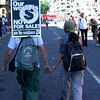 In the 1990s, we were all optimistic about globalization—and in my case, it was about how the internet could unite populations. Every one could become a critic of a bad product, with an ability to reach the company directly. Emails could be sent for free—a revolutionary idea at the time. In the 1990s, we were all optimistic about globalization—and in my case, it was about how the internet could unite populations. Every one could become a critic of a bad product, with an ability to reach the company directly. Emails could be sent for free—a revolutionary idea at the time.Only that some companies weren’t listening. The one-to-one theory only works when companies devote people to read the emails. Some did. Then, however, they needed to have the clout to get those messages up the chain to top management. Few did. So in 2006, where we continue to face a large rich–poor gap, where do we head? Humanity seems to make a regular mistake of throwing the baby out with the bath water when one path doesn’t work. But many of the ideas submitted in Beyond Branding and elsewhere still work. Some of the best ideas came in Simon Anholt’s Brand New Justice, which I heartily endorsed when I first read it. All these economic ideas given to us by many of the world’s experts failed because they only looked good on charts, but had no real connection to the people they summarized in numerical form. These experts all spoke in jargon—to hide their incompetence or disconnect. So why do we continue to treat this branch of commerce with such reverence, worshipping it more than religions themselves—and, indeed, fudging the plain meanings of helping people with so many equations that even the idea of God seems easier to explain? In business, I still believe brands remain the only interface between organization and consumer. And if that interface can be refined, then that “united world” idea can still happen. Right now, first-world brands are so successful the world is in danger of global oligopolies. I have mentioned many times that in New Zealand, one French combine owns Just Juice, Eta, Griffin’s and Fresh-up—four brands considered by most Kiwis to be domestically owned. Oligopolies are one area where the economists are right: they can form monopoly powers, raise prices and make life hard for consumers. Just look at how much you are paying for gasoline. And I still have not heard from Danone after it sold me Citrus Tree orange juice that had gone off in 2005. They do not need to listen to consumers because they have the power to do as they please. Their brands are so strong that people will consider buying from them without question in so many cases: McDonald’s, Nike, and the others which have been subject to Naomi Klein’s criticisms. What if third-world brands had the expertise and polish of first-world ones? Simon submitted this and I even tried to get a forum under way, though I never launched the latter with enough oomph to make a big change. Nor are there enough people in remote villages with web access, another obstacle in the path to moral globalization—so we need people who can take the idea to the people, like Safia Minney of People Tree. But I hope this can still happen: a forum where third-world entrepreneurs can get information from first-world branding consultants, for free. Comments and volunteers welcome—we already have a few Medingeites signed up. Redressing the balance. Brands are proven to command premiums on pricing, so let’s give that premium to poorer nations. Create enough competition to the oligopolies that they have no choice but to listen to consumers for new-product-development ideas, and more. That way, each consumer has the power to act. The balance is already shifting in the consumers’ favour—email campaigns exposing misdeeds are now common—but whether they affect consumer behaviour in the long term is open to question. I still say raising the incomes of poorer countries and closing the gap will still allow each nation, first-, second- or third-world, to become richer through specialization. We just need to stop worshipping the economists and look at the real world: are the people in a better state, or are they in a perpetual race to the bottom with falling wages? And can they develop brands which can command premiums, so their communities become richer and they do not need to rely on the mega-retailers such as Wal-mart who continue to drive their prices down? I’m not asking for the branders to be worshipped, mainly because (as some high-profile authors have shown) most do not have a darn clue of what they are talking about. Or they couch things in 1950s’ sales’ maximization terms, taking us back to the Wall Street-is-supreme idea that landed us into this mess in the first place. But for the most part, those with a humanitarian agenda generally have a workable, practical, consumerist method for working us out of the abyss. We have to. We built our first-world, private-sector clients using those methods. Now we should apply them, using our own time, to show we aren’t manipulative, establishment-hugging cronies. The guts of the forum are here, but it needs some TLC—and monitoring to prevent spammers from posting porn and gambling links. Assistance welcome. Del.icio.us tags: globalization | globalism | branding | brands | humanitarianism | unity | economics | global economy Posted by Jack Yan, 10:21
26.1.06 More thanks
Another Medinge-affiliated blogger, Olaf Brugman, has been kind enough to mention me in his latest post. I have not yet met Olaf at the Medinge summits, but I do know that he shares many of my views on humanitarianism and how it needs to affect branding. Catch more at his blog here.
Meanwhile, DK, one of the few true experts out there on youth branding, has added me to his blog roll. My many thanks to both! Posted by Jack Yan, 15:13
Congress investigates Google over Red China Google was once a small company with a global influence. Now, it seems to be joining the establishment in more ways than one. Cooperating with Red Chinese censors is one example; and yesterday, Blogger claimed it had a half-hour outage today at 4 p.m. PST. Google was once a small company with a global influence. Now, it seems to be joining the establishment in more ways than one. Cooperating with Red Chinese censors is one example; and yesterday, Blogger claimed it had a half-hour outage today at 4 p.m. PST. By my reckoning here in Australia, and after clearing my cache several times and accessing pages that I had never visited (trying to avoid caching at the ISP end), I now make it 6 a.m. PST the next day that Blogger has finally become accessible. Half an hour stretched to 14 hours. I didn’t expect that. The hypocrisy with Google is, on one hand, refusing to cooperate with the US Government when records were requested; while kowtowing to an unelected government on the other side of the Pacific Ocean with its wishes. Still, search engines are not perfect, not even ones run by the Politburo. Every now and then, the right pages might drift in. Let’s hope so, as it’s unlikely that Google’s decision will be rapidly undone. Unless, of course, Congress investigates whether Google’s action in Red China is legal—and I received news that it is doing just that. Reporters without Borders will be testifying along with some of the big US technology firms in hearings beginning February 16. Posted by Jack Yan, 15:01
The other Red Chinese censorship story this week While most of the mainstream media are (rightly) exposing Google’s decision to opt for censorship and cooperation with a totalitarian régime over the Chinese people’s right to free speech (see here), they may have missed this story. While most of the mainstream media are (rightly) exposing Google’s decision to opt for censorship and cooperation with a totalitarian régime over the Chinese people’s right to free speech (see here), they may have missed this story.As background, the following is in the Red Chinese Constitution: Article 35. Citizens of the People’s Republic of China enjoy freedom of speech, of the press, of assembly, of association, of procession and of demonstration. Article 36. Citizens of the People’s Republic of China enjoy freedom of religious belief. No state organ, public organization or individual may compel citizens to believe in, or not to believe in, any religion; nor may they discriminate against citizens who believe in, or do not believe in, any religion. The state protects normal religious activities. No one may make use of religion to engage in activities that disrupt public order, impair the health of citizens or interfere with the educational system of the state. Religious bodies and religious affairs are not subject to any foreign domination. Mary-Anne Toy notes in her column in The Age that the Politburo has closed down ‘Freezing Point’, a section in the China Youth Daily, the official youth paper controlled by the Communist Party. Toy notes that any decision to shut down a section in the newspaper would have required the approval of President Hu Jintao, ‘seen as further evidence of the President’s commitment to cracking down on dissent.’ At the beginning of this year, I blogged my thoughts on the editorial staff walk-out at the Beijing News, which highlighted yet another incident of the Politburo’s crackdowns. What gets me is why Red China, which on one hand talks about how fast it is growing (with speculation that it has overtaken the UK and France), acts so like a tin-pot small country, giving away territory to smaller nations and acting hypocritically against its own constitution. Does the Politburo not know the contradictory message it is sending, and has it no example of how large, successful countries behave? Does it also not realize that this merely brings suspicion over all its claims about its high growth or its claim there is no state control over its currency? China itself was once an example of freedom and progress, and all today’s Politburo needs to do is to re-examine its own history. Confucianism, for starters, is founded on education and libertarianism. Freedom of information and the press would have been quite comfortable in a Confucian system. Singapore remains the closest example (though the presence of so much legislation wasn’t part of the philosopher’s deal), and despite being geographically tiny, has the sort of growth that can’t be ignored. It even behaves like a large nation, with a presence on the world stage in so many areas. Red China, if it really wants to play on the world stage, might want to take a leaf out of the Singaporean book. It’ll help the nation brand—unless, of course, China merely wants to be the world’s sweatshop, devoid of innovation. All the better for India if that is China’s choice. Posted by Jack Yan, 14:00
25.1.06 All Dunn (all the time)
My friend and colleague Nigel Dunn has set up his own blog, at www.nigeldunn.com. It’s going to talk about his area—web development—but it is yet another part of the many segments that make up the Jack Yan & Associates’ family. I know Nigel has said some nice things about me in his second entry, but he is being too kind: he’s the nice guy here.
Posted by Jack Yan, 10:13
Ford slashes 30,000 jobs to keep shareholders happy I take no joy in being proved right as Ford slashes 30,000 jobs and closes 14 plants, or a quarter of its US workforce. It is always dangerous to sit back when the going is good, and for a long time, with the F-series trucks selling so well, Ford didn’t look at its car lines. I take no joy in being proved right as Ford slashes 30,000 jobs and closes 14 plants, or a quarter of its US workforce. It is always dangerous to sit back when the going is good, and for a long time, with the F-series trucks selling so well, Ford didn’t look at its car lines.Once the top sellers in America, with nameplates such as Escort and Taurus, Ford has slipped so far down the top 10 that it’s lucky it’s still there, selling antiquated technology. MG Rover closed down with cars with newer roots than the pensionable 2006 Taurus. It is fair to remember that Ford has managed to do well in markets such as India, where the Fiesta Sedan (with different bodywork to the Brazilian model) has had a great introduction. But slashing potential capacity by 1·2 million in the US could lead to poorer economies. The solution still seems very finance-bound, though despite that qualm, I could not say what else Bill Ford could do to keep his shareholders happy. Ford is a great example of share prices and the old financial model driving everything. Bill Ford’s new slogan, ‘Way Forward’ is his second since he became chairman. These are all designed to placate American shareholders in the short term. But why even have slogans if they are directed at a single group of people in the organization? Brands do not work that way: the message goes to everyone. Mr Ford is at least right about speeding up innovation processes, and I have always felt that its German, I mean, European, operations were growing from strength to strength as a result. Köln’s more expressive designs for 2007 and 2008 will at least prevent Fords from looking like Volkswagens, something that it had been guilty of (look at the CD132 Mondeo and compare it to a Mk IV Passat; or the Fiesta and Polo; or the Five Hundred and an old Audi 100). Some branding work at the company suggests Ford can focus (no pun intended) on its American values (see here)—and to me, that makes sense. But I worry if the capacity can be regained. The last time I heard such dire cutting of capacity for the reason of meeting demand was with British Leyland. It never recovered from the loss of economies of scale, although it was also true that that company was starved of R&D investment, something that Bill Ford won’t do in Dearborn. Del.icio.us tags: Ford | branding Posted by Jack Yan, 02:26
Advance Australia under 100 km/h I’m blogging from the Park Hyatt in Melbourne today, about to hit the tennis with a client. But as I drove here in my rent-a-Holden Astra—a car which the Avis girl told me was Australian, but I am very sure is Polish—and re-learned how to use wind-up windows (first time I have encountered that in 16 years), I noted how many signs were all over the freeway. I’m blogging from the Park Hyatt in Melbourne today, about to hit the tennis with a client. But as I drove here in my rent-a-Holden Astra—a car which the Avis girl told me was Australian, but I am very sure is Polish—and re-learned how to use wind-up windows (first time I have encountered that in 16 years), I noted how many signs were all over the freeway.Signs warned us about tolls, red-light cameras, speed cameras, road works, enforcement of the above, the number of days’ grace we had if we did not get the equivalent of the E-Z Pass—and it reminded me how different Australia is from New Zealand. I may criticize New Zealand through blog entries, but there is one thing the country should not change: its trusting nature, where people are presumed to be smart enough to watch themselves. It doesn’t always work, but it works more often than one thinks. Public safety is not being able to see a cop on every street corner, and civility is not about the number of laws being enforced—but the absence of both. A civilized nation should, ideally, not need to remind its citizens at every turn that they are being watched, and that every act they commit might be under scrutiny. The Victorian Police is probably delighted that I was so seized with fear (and fatigue due to working 45 of the last 48 hours before I flew out) that I stuck to 100 km/h on the freeway—but I found that caused more problems for safety. I dislike the fact that the safety lobby conveniently ignores that around four per cent of accidents in Germany happen in places with no speed enforcement, on the famous autobahnen. I recall taking an older but far better equipped Opel Astra to 205 km/h in Frankfurt, safely. And has New Zealand’s obsession with speed worked? While the mainstream media are all too quick to point out the success of New Zealand Police campaigns with road-toll falls, they conveniently forget to make the same connection in one of the highest road-death periods in the 2005–6 holiday seasion. Yet Police continued to run a strong advertising campaign? Dare we say it is a waste of money, or that money should be put in to driver education? Education is always the key to a civilized, functioning society—and perhaps this example, too, serves to show the futility of advertising. Whether it’s signage threatening penalties here in Melbourne for speeding, or blanket advertising in New Zealand with crashes galore, the fact is if you don’t get at the underlying behaviour, ads don’t work. No matter how gross these ads get, if 12-year-old kids are still being told that aggression is acceptable behaviour—and not leaving it on the rugby field—then it all becomes habitual. Still, I look a little jealously here: interest rates are low, with the country’s economy strong and able to weather a lot of crap—in dire contrast to the doom of lay-offs that has been reported by the mainstream media in New Zealand over the last few days. Posted by Jack Yan, 01:18
23.1.06 The Americans don’t like it, Gorgeous Here’s a case where British humour has “translated into American” about as well as that year Jerry Springer hosted Miss World and his American humour (or humor) fell flat. The Gorgeous campaign for the Jaguar XK—which I like, probably because I understand the usage of the word as a noun and some Americans do not—is getting rather nasty reviews in the United States, including at Slate, most recently cited in the blogosphere by Ernie Schenck. In fact, they are being rather venomous—and Mr Stevenson of Slate shouldn’t hint at a correlation between this campaign and Jaguar’s poor sales of late. Those poor sales are due more to product and young buyers doing their research. When the Ford Mondeo-based X-type was introduced, too-trendy commercials touted the car as being for ‘the new Jag generation’, when its styling turned off all but the old Jag generation; and the new XJ6 and XJ8, despite their advanced construction, look like the old XJ6 (and I am talking about the ones Arthur Daley drove). Duh. No growth from new markets. Old market base dying off. They convey a lack of honesty, and people were more than willing to pick that to bits. Hence, Audi, which doesn’t go as extreme with its claims for its vehicles, doesn’t get attacked nearly as badly for building cars on Volkswagen Golf platforms or with Golf engines. So why not have a campaign that turns that 180 degrees? The new XK8 is gorgeous, and Gorgeous reckons the new car is gorgeous. Jag sales will rise, buoyed by this new car, and sedan sales will pick up with new models in the second half of this decade. Sure, this campaign might not be a good choice for going global, but Gorgeous thinks it’s not ’arf bad. My earlier review of the campaign can be found here. Posted by Jack Yan, 01:26
22.1.06 Brandchannel announces its top brands for 2005 Interbrand’s Brandchannel has announced the results of its brand survey, with Google pipping Apple, and Skype coming in third. Starbucks and Ikea followed. Interbrand’s Brandchannel has announced the results of its brand survey, with Google pipping Apple, and Skype coming in third. Starbucks and Ikea followed.The poll, for those who took part, is subjective, but then, most brands are. Or at least, when we quantify them, the methodology can be suspect. If the regular valuation-based tables are accurate, they would have greater parallels with these consumer-based ones. Brands encompass the passion they generate in people, and are not just assets on a balance sheet. This illustrates a decline in Coca-Cola, for a start. If Coke doesn’t believe this, it needs to watch its value ranking slip: it will follow these surveys on consumer affinity. In fact, Coca-Cola did not even make the global top 10. (Some reasons for Coke’s decline are covered at and linked from here.) When examining different regions, Nokia was top in Europe, Sony in Asia and Corona in Latin America. The North American top three were Apple, Google and Starbucks (Target and Lance Armstrong following). The sample was 2,528 branding professionals. The Brandchannel article can be found by clicking here. An earlier survey from Landor, on Americans’ top 2005 brands, was covered in the Beyond Branding Blog here. The Medinge Group 2006 Brands with a Conscience listing—a very different collection—is shown at this link. Del.icio.us tags: brand | branding | Google | survey Posted by Jack Yan, 22:46
Thanking fellow bloggers
Ever since I started this blog on January 21, to succeed (at least for me) my posts at the Beyond Branding Blog, I’ve been buoyed by the camaraderie out there in the blogosphere. A major thank-you to those linking and putting up links, and even giving me plugs in their blogs: Johnnie Moore, Hugh MacLeod, Tim Kitchin, Stefan Engeseth, Ton Zijlstra, and Nick Smith. I feel like a “real” blogger now.
Posted by Jack Yan, 22:37
A world without time (addenda) Below is an old post from the BBB last December which I felt was worth reposting here. Below is an old post from the BBB last December which I felt was worth reposting here. It also dawned on me that Einstein made one of the earliest steps into getting us to think of a world (if not universe) without time, or least one where it wasn’t a constant. His good friend Kurt Gödel theorized it in a paper about time travel, and to quote the Publishers’ Weekly summary of a book on the subject, ‘But if one can travel through time, how can time as we know it exist in these other universes, since the past is always present? And if time doesn't exist in other universes, then it may not exist in ours either.’ I’ll try to refrain from repeats after this one—and rest assured the next few posts below are brand-new. Here goes. A friend of mine records her, and sometimes her husband’s dreams, and this one came across as quite inspiring: [He] dreamed last night that he was trying to get the people of the world to forget everything they previously knew about “time”. There would be no more dates, hours, years … He had convinced me easily but was going out into the world to try to get this to happen. Interesting, huh? He felt it would change so much. It would certainly get us over the deadline mentality. Blogs are almost like that—unlike newspapers and magazines, there is no fixed schedule. In fact, some online magazines are the same. When they come out, they have passion, rather than fatigue, behind them, because they have been given the time to mature. It makes sense in many ways—already automakers are saying they need new models every six months because the novelty of a car doesn’t stay for two years any more. Remove the notion of time, and this would not matter. I know: some of you are thinking ‘Anarchy!’ Perhaps so—but I know that we have sacrificed trust for time in this day and age. And we keep saying that we want more trust in our business and personal relationships. If we weren’t so ingrained into an instant-gratification society, we might rediscover that level of trust once more. Posted by Jack Yan, 13:10
Marketing directors’ first 100 days: the report First 100 Days, where my friend and colleague Tim Kitchin contributed, has released its report (by Oxford Strategic Marketing and Hunter–Miller). It’s about what marketing directors do in their first 100 days on the job, and reveals dos and don’ts to aid their chances of longer-term success. There was a total sample of 75 (25 interviews, 50 further subjects in a second test) and the results draw parallels with Jim Collins’s Good to Great research which I mentioned at Beyond Branding earlier this month. First 100 Days, where my friend and colleague Tim Kitchin contributed, has released its report (by Oxford Strategic Marketing and Hunter–Miller). It’s about what marketing directors do in their first 100 days on the job, and reveals dos and don’ts to aid their chances of longer-term success. There was a total sample of 75 (25 interviews, 50 further subjects in a second test) and the results draw parallels with Jim Collins’s Good to Great research which I mentioned at Beyond Branding earlier this month.Collins’s CEOs, as detailed in the report: • displayed “a compelling modesty, are self effacing and understated”; • were “ambitious first and foremost for the company, not themselves”; • first got the right people in the business before figuring out where to drive it. Marketing directors have similar recipes for success. The report can be downloaded here. The First 100 Days blog is welcoming comments. Posted by Jack Yan, 12:49
Heart’s rules Earlier this year, I mentioned how one dictionary is allowing Wiki posts, for the sake of etymology. One interesting word that I have noticed, for which I have not checked for, is heart, as a verb and a substitute for love. Earlier this year, I mentioned how one dictionary is allowing Wiki posts, for the sake of etymology. One interesting word that I have noticed, for which I have not checked for, is heart, as a verb and a substitute for love.They say, ‘I heart this dress.’ Maybe the word love has been corrupted by the likes of Kevin Roberts for Lovemarks, or maybe it just doesn’t mean the same as it once did. Or, maybe it’s a useful way of raising the traditional meaning of love, by introducing a verb that has a slightly lighter meaning. Many years ago, a famous designer said that the ‘I love New York’ symbol—the ‘I heart NY’—would be considered classical literature in 100 years, with kids no longer reading, and watching MTV. That hasn’t come to pass—kids have been developing Harry Potter Syndrome thanks to the weight of Joanne Rowling’s books—but it shows how we have converted a symbol into a word, rather than the other way around. It’s not just the power of logos and symbols, but a shift in the way we comprehend everyday speech, perhaps through texting or access to dingbats and Wingdings. The earliest example of this that I can recall (at this late hour) was in the mid-1990s, when Peugeot showed a convertible called the vingt-cœur (but in English, the company insisted it was the two-oh-heart—probably because the French pun didn’t translate, and it sounded too much like wanker). The number plate and badging showed just that: 2, 0 and a heart symbol. The car eventually became the Peugeot 206 CC. This hasn’t come from another generation’s speech or a foreign language, which is how we normally get our words, but a graphic. I am a pretty staunch defender of English usage, sticking to Hart’s Rules, but this change is fairly important, a lot more than abbreviations in texting (which will disappear as technology improves—mark my words). Will the most famous logos make the leap into verb form? A few years ago we did have ‘Did somebody say McDonald’s?’ but it’s a noun, just like Apple—the pun is there but it’s not as clever. Will the squiggle that denoted the Artist Formerly Known as Prince be a candidate, or will we one day say, ‘Did you swoosh?’ when asking someone if they have bought new trainers from a company in Oregon? Posted by Jack Yan, 11:48
‘Washes whiter’ is a claim of the past After World War II, indices were developed to show how advanced an economy was. The use of plastics was one indicator—and India scored poorly on that front. It didn’t use the level of fossil fuels that “advanced” economies did. After World War II, indices were developed to show how advanced an economy was. The use of plastics was one indicator—and India scored poorly on that front. It didn’t use the level of fossil fuels that “advanced” economies did.India, these days, is having the last laugh. It has a growing middle class, it is nation-branding, and right now, its advertising industry has reformed enough to adopt corporate social responsibility as part of the messages it’s using for even some large multinationals. The cynics among us can ask how real CSR is, or if all this is merely lip service, but the fact remains that the Indian consumer is receptive to the concepts. In addition, India seems to have “mainstreamed” CSR, unlike the west, which still touches upon it. In India, Surf is the best known adopter of a CSR message in its marketing communications, encouraging the saving of water, rather than telling people that it washes whiter. In The Economic Times, Grey COO Ashutosh Khanna said, ‘Marketers … agree that communication to social environment by corporates has evolved as an effective advertising tool, more than a mere obligation.’ It is a position I have maintained all along, whether in Beyond Branding or any of my other works, including Lucire. And if India is shown to be sincere—after all, its Infosys did win a Medinge Brand with a Conscience award—then I have to say advertising is another area where the nation is leaving the west well behind. Del.icio.us tags: CSR | Branding | India | Social responsibility | Environment Posted by Jack Yan, 08:47
21.1.06 Evangelizing the James Bond brand Star Trek probably creates the greatest brand evangelists of all cinematic and TV properties (see this earlier post), but there are more than enough men out there ordering vodka martinis and damaging the drink by specifying ‘Shaken, not stirred.’ It’s all thanks to Bond, James Bond—Ian Fleming’s literary hero that has become one of the most passionately discussed fictional heroes of all time. Star Trek probably creates the greatest brand evangelists of all cinematic and TV properties (see this earlier post), but there are more than enough men out there ordering vodka martinis and damaging the drink by specifying ‘Shaken, not stirred.’ It’s all thanks to Bond, James Bond—Ian Fleming’s literary hero that has become one of the most passionately discussed fictional heroes of all time.When New Voyages was made, the executive producer had spent $100,000 reconstructing the bridge of the USS Enterprise in his garage. Now, someone has paid £1 million for the Aston Martin DB5 used by Sean Connery in Thunderball. While franchise owner Eon Productions will never permit a too-close James Bond production to be made—it clamped down even on Honda advertisements some years ago that hinted at Bond, and pressured (or agreed with) Mike Myers to run a James Bond trailer when Goldmember was shown—it makes me wonder if the new buyer is enough of a brand evangelist to take the Aston over to Switzerland and shred the tyres of a Mustang or two. It’s highly doubtful—one of the Bond Astons went missing a while ago, and the survivors will be guarded like Fort Knox against any would-be Goldfingers. Nevertheless, Eon has preserved the Bond brand well, and I have more than a feeling that the firm trawls the Bond forums for ideas. It might not permit “evangelizing” to the extent of Paramount and Star Trek (viz. do what you like as long as you don’t profit), but generally allows the forums to go ahead provided they do not have MGM- or Eon-owned materials. It asked fans for a name for the last film (I suggested Thorns of Ice, which sounded Flemingesque). It’s tolerated many parodies (e.g. photo shoots inspired by Bond—we are running one in Lucire’s print edition) and even clothing collections that have taken Bond novel names—all of it fuelling the Bond mystique. Bond movies, we are told by insiders, are a communal affair—which may be why they have lasted so long. They allow the brand to be guided by fans—with occasional lapses of judgement such as Lee Tamahori’s Hollywood-slick Die Another Day (we won’t mention the CGI). Whether Eon consciously knows it or not, it has been ahead of the individuals-are-brand-stewards idea that people like me write of when we go on about democratization. The trawling (along with Barbara Broccoli’s persuasion) could explain the casting of Daniel Craig in Casino Royale, with fans saying they wanted another From Russia with Love rather than a Die Another Day—but will they listen on fans’ objection to the idea of a “Bond begins”, which the new film is hinted to be? No doubt we will know this year as the fans follow the progress of the film—producing far fewer red herrings at their sites than the mainstream media (the Murdoch Press was particularly guilty with naming Eric Bana and several others as the new James Bond). And I won’t need Barry Norman to tell me that it will be better than the other two films also called Casino Royale. Del.icio.us tags: James Bond | Branding | Democratization | Star Trek Posted by Jack Yan, 23:06
A hello of sorts
I’ve posted a goodbye of sorts at the Beyond Branding Blog, but there are still a few nip–tucks here.
Stefan Engeseth tells me that on the Apple Macintosh Safari program, the burgundy header above doesn’t show. I have tried a few tricks and it’s everyday HTML as far as I can tell, but if it still doesn’t work, please let me know. Also, I use ligatures in most of my posts. Some Windows systems with TrueType fonts might not display them. I’m on XP and it’s fine to me, but if you’re one of those people who see a blank box in this sentence, please also send me a message. Some of the links to directories, etc. at the bottom right of the page are taken from the Beyond Branding site, but will steadily be replaced by my own. (I implemented them there, anyway!) Finally, if you have stopped by here via Beyond Branding, please leave a comment—I’d like to gauge how well the transition is going and if you’re finding me. Posted by Jack Yan, 22:50
The brand wiki In some of the more recent blog entries here, we’ve discussed how brands are driven more by citizens than organizational managements. It’s not happening in isolation: it’s happening to the English language at Merriam–Webster. The dictionary people have implemented a Wiki of colloquialisms. Rather than editors dictating the words, everyday folks can go in and add them. It’s useful from the point of view of tracking etymology and seeing which words (e.g. Google as a verb) have staying power. In some of the more recent blog entries here, we’ve discussed how brands are driven more by citizens than organizational managements. It’s not happening in isolation: it’s happening to the English language at Merriam–Webster. The dictionary people have implemented a Wiki of colloquialisms. Rather than editors dictating the words, everyday folks can go in and add them. It’s useful from the point of view of tracking etymology and seeing which words (e.g. Google as a verb) have staying power.What next? A brand wiki? It is totally possible, where everyday citizens put down their ideas for a brand’s direction and it’s all fed back into management to see if there is merit to steering an organization a certain way. It could happen, and it might even happen this year. Posted by Jack Yan, 15:02
Monkey business I brought up Reuven Brenner’s The Force of Finance at another blog earlier this month. Chris Macrae introduced me to the book, and I ordered it from a UK retailer, who shipped it to my office in London. (I was passing through at the time, and I always like saving a few pounds on shipping.) Soon after we both got in touch with Reuven. After bringing it up in my blog post yesterday, I dug it out and read this in his chapter on higher education: I brought up Reuven Brenner’s The Force of Finance at another blog earlier this month. Chris Macrae introduced me to the book, and I ordered it from a UK retailer, who shipped it to my office in London. (I was passing through at the time, and I always like saving a few pounds on shipping.) Soon after we both got in touch with Reuven. After bringing it up in my blog post yesterday, I dug it out and read this in his chapter on higher education:Four monkeys were put in a room. In the center of the room, there was a tall pole with bananas suspended from the top. Whenever a monkey tried to retrieve them, however, he was hit with a shower of cold water. After several attempts yielded the same result, the monkeys stopped trying. At this stage, one of the original monkeys was removed and a new one was added. When the newcomer reached for the bananas, the other three pulled him back. After a few tries, the new monkey also got the message and stopped trying. One by one, the original monkeys were replaced, and each new monkey learned the same lesson: don’t reach for the bananas. Though the new generation of monkeys had never received the cold shower, they adhered to this behavior. The quotation was about the institutionalization of education: that universities are too much about publishing incomprehensible, exclusionary works and organizing conferences for their self-importance than really imparting that knowledge. Not only does it tie in with Reuven’s observations within the university system, it fits with Chris’s, and it fits in with a lot of the things we have been blogging about. Beyond Branding, as a book, tries to make these points which might seem way-out for some, but at least we are trying to pick up the slack of modern marketing courses. It reminds me of the way New Zealanders uniformly attack the administration of the late Sir Robert Muldoon (1975–84), even though many of those who criticize him have no memory of the era. But, when many economics’ lecturers who could have sided with him were removed when Sir Robert lost power in 1984, when TV documentaries paint him as a villain, and when a mini-series, Fallout, is currently being rerun on network television and does the same, who questions? Whether one was alive during the Muldoon administration or not, one might be like a monkey. Indeed, you can read the monkey behaviour here. One blogger questioned the lies he was told about the era, and the anti-Muldoon din followed, with only one or two dissenters. And there were enough bloggers to label this post a looney-left post—odd in a liberal country. But then Muldoon was not in a left-leaning party. I enjoy this issue because it’s one situation, of many, that we should be questioning. I am not saying I have it all correct—but to not even question? Where are we, in Cuba or Honduras? John Kay thinks there are parallels with Argentina. My recollection is that New Zealand had gas–petrol hybrid cars from around 1979 and filling stations were commonplace. That we were one of the most advanced economies around with recycling and alternative energies. Not that that is ever raised. As I wrote earlier in this blog, politicians find it easier to admit to Satanism than Muldoonism—because Parliament is a forum of trained monkeys. And so are the mainstream media (which are all owned by foreigners, anyway—well, nearly all). So in marketing, how many are trained to question anything beyond Kotler? How many sustainable principles are suppressed because they do not fit in with the establishment? Even in my university days, we weren’t encouraged to do the questioning till the 400 level. Perhaps I am naturally cynical, but I excelled in this. Summa cum laude and all that rot. Institutionalization is a very bad thing, especially if we encouraged people not to question, and not to reason. We fight, and have to fight, this ignorance every day. It is why I got into media, and why I got into consulting. With the former, it was raising questions on an international level. With the latter, it was about helping clients raise questions on a firm-by-firm basis, maybe affecting an industry. It still is, in both cases, because my job is not done. Co-writing Beyond Branding was combining the two—questioning, in the words of Deepak Chopra, in order to break through the hypnosis of social conditioning. Posted by Jack Yan, 14:59
We were nice people (for two weeks after 9-11) I often enjoy Mike Bawden’s writings at Much Ado About Marketing, and this post was no exception. I often enjoy Mike Bawden’s writings at Much Ado About Marketing, and this post was no exception.Mike cites David Wolfe from the Ageless Marketing blog, who believes marketers need to be healers, and more are making the shift. But, he validly notes, ‘1st world consumers, primarily Americans, need to stop consuming so much and leave more on the table for the rest of the world. ‘But can we afford to pay the price and do the right thing?’ Taking a trip down memory lane, I agree some shift needs to take place. At the beginning of each decade—1980, 1990, 2000—someone says the next 10 years would be less selfish than the last. Each time, that person has been wrong. I admit that the 2000s have seen some of the conscientious people come forth—the internet has made us visible. But the shift hasn’t changed in consumption habits, at least not in a “tipping-point” sort of way. There are a few things that can make it happen: (a) we cease valuing companies on their share prices, and instead value them on their social good; (b) this will impact on the state and could result in trade liberalization. If Danone of France, for instance, was rated on how many consumers it could serve in the third world, helping their communities build themselves up so they could be fed, its immense power—it owns most of the food brands New Zealanders buy, for instance—could push its home country to lower trade barriers. The host country might do the same. Economists would tell you that trading increases wealth in both nations. But this still seems like a dream, because most of us in the first world remain trapped in keeping up with the Joneses and in high consumption patterns. The only time when we all were united and became more caring was between September 11 and 25, 2001 (though some of my Arab–American friends would disagree). For a while there, we were less bitter, more inclusive. The person sitting next to you was a person, not ‘black’, ‘white’, ‘yellow’, etc. On or around the 26th, according to a friend of mine who was a waiter in New York in those days, everyone turned into a bastard again. They began demanding service as rudely as they ever could. Does it take a disaster to make us better? I would hope that the goodness we could find inside us could come out without jets hitting buildings. In some places, we are like that. But in many other countries, we seem to believe that the behaviour on shows like Survivor or The Apprentice (being conniving and big-mouthed wins), or Fear Factor (where self-confidence is actually arrogance, rather than humility), is “normal”. What’s it going to take to make the shift? Posted by Jack Yan, 14:58
The selling of prejudice A Christian friend of mine blogged about how some American homosexuals felt they were being persecuted in the United States—despite having many more rights recognized there. And when I wrote my response to his entry, I felt that there was a relevance to branding. A Christian friend of mine blogged about how some American homosexuals felt they were being persecuted in the United States—despite having many more rights recognized there. And when I wrote my response to his entry, I felt that there was a relevance to branding.The belief by gays that they are being persecuted might come from the politicization of their issues, with a willing and cooperative media—and sadly, there’s money to be had in doing so. I am not blaming gay groups—often “right-wing” groups are just as guilty. This perhaps happens more Stateside than it does here, where everything seems to be under a political bent—from race relations to sexuality. Though follow the trail more, and it leads to dollars: you sell more air time and newspaper ads if you make it controversial and exaggerated. Earlier media simply didn’t cover the inflammatory rhetoric, dismissing them as rantings of madmen (in some cases they are). At the end of the day there was more integrity: reporting rantings was bad form then, but is good financial sense now. This sense of responsibility ensured that everyone felt reasonably good about themselves. Today’s pessimism has come from these forces, but they have led to a lack of faith and acceptance. This has persuaded gays that if they are to be visible in society they either (a) stay in the closet or (b) target being outside the mainstream—the exception being the more militant speakers, who get the headlines (assuming they exist today). The gay community’s freedom has been lost. That money argument I make extends further and adds to prejudice: why not target the mainstream, now that we can quantify exactly how much the gay market is valued? (Equally, the ANZ has begun an ad campaign in Cantonese. Why not Mandarin? Because while Mandarin speakers outnumber Cantonese speakers, Cantonese speakers usually have better credit.) As mentioned before, I am sure homosexuals don’t need a heterosexual like me to defend their rights, just as I don’t expect the majority race to defend my rights. I am not picking on them in particular—but I am using their group as it is convenient. Now, the solution may be to reintroduce a concept of responsibility (how about it: brand responsibility?). The media realize, for instance, that they need to change—falling newspaper circulation figures are cause for alarm. Therefore, the solution is to put integrity back in the news—because cynical consumers have a BS meter built in to their minds, and have been rejecting the mainstream media (MSM) in favour of either online media, blogs or media outlets that they perceive to be balanced. When that happens, the voices that are reported may have more substance rather than sound bites, heading back to a more “educated” form of reporting. But this must begin at the individual level. We get what we deserve—or what we unwillingly pray for. If we don’t demand newspapers change, for instance, or if we keep feeding the tabloid machine, then we only have ourselves to blame when they report on the loud-mouthed fringes, one which limits the quieter, tolerant members of society, regardless of creed, sexuality or race. How does this relate to branding? If our theories are right, and citizens are responsible for the way a brand is perceived, then we have the power to steer companies to responsibility themselves. We need to decide whether a company is worth our patronage based on their social record, not their share price. It’s up to us as much as organizations—just as some of the world’s strongest brands (Patagonia, Amnesty International, the Body Shop) already realize. And what is the measure of their success? Your awareness of them, your loyalty to them, and the level of passion they create amongst their audiences. Posted by Jack Yan, 14:45
Whatever you do, don’t mention the war Detective Marketing’s Stefan Engeseth wound up on a Mitsubishi PR event this week, and was treated to a dose of experiential marketing with one of the company’s rally cars. Detective Marketing’s Stefan Engeseth wound up on a Mitsubishi PR event this week, and was treated to a dose of experiential marketing with one of the company’s rally cars.Rallying helped keep Mitsubishi Motors Corp. from sinking into oblivion (and, to an extent, new products such as the Colt). The company has been in disgrace and scandal at least twice in the last 10 years, from memory—its failed merger with DaimlerChrysler and an earlier scandal at its corporate level were major hits against the firm (see this link—merely the tip of the iceberg). As reported in the Washington Post in 2004: A raid on Mitsubishi offices five months ago yielded the evidence that exploded into one of the largest corporate scandals ever in Japan. Authorities say seized documents, and subsequent admission of fault by Mitsubishi Motors Corp. (MMC) and a spinoff, Mitsubishi Fuso Truck & Bus Co., indicate that since the 1980s, the automakers systematically hid defects involving 800,000 vehicles. Among the hidden flaws were defective front axles on the same type of truck as that involved in Okamoto's death. Its failure to get economies of scale with its products have also hurt it: the Lancer Cedia, introduced in Japan in 2000, only made it to many foreign markets in 2003; similarly, its Galant, introduced in the US in 2003, is facing its first full sales’ year in Australia in 2006. But the rally cars were made into toys—and kids love toys. The Lancer Evolution’s appearances in video games also helped. Branding is so often about spreading the love, whether it’s giving permission for your logo to appear in a link or someone else’s blog, or letting them make a toy. In the 21st century, being overly protective and proprietary, and threatening lawyers on people, are going to work against your brand—especially in an era of citizen media and individuals steering the brand. Mitsubishi needed to do this. After all, having a single brand to cover warplanes (reminding people of alleged misconduct against PoWs during WWII) and cars is not a good idea. Not long ago, it released a truck called the Zero Fighter. It would be, as I mentioned to Stefan, Mercedes-Benz releasing a truck called the Jewish Transporter. Given very clumsy moves like that, and scandals galore that Mitsubishi Sucks reports on, Mitsubishi needs to do what it can. Of course, many problems would be solved if it took a My Name Is Earl approach: admit to the negative past, and make amends—then watch Red Chinese sales grow with the bad karma removed. Posted by Jack Yan, 14:32
Bin Laden’s tapes: the virtual firm’s press releases When I presented my end-of-year keynote to the Australian Graphic Design Association in 2004, and wrote a paper on virtual firms and Al-Qaeda, I wanted to get this message across: we have nothing to fear from audio tapes from Osama bin Laden. When I presented my end-of-year keynote to the Australian Graphic Design Association in 2004, and wrote a paper on virtual firms and Al-Qaeda, I wanted to get this message across: we have nothing to fear from audio tapes from Osama bin Laden.Today, Mr bin Laden issued a new tape with another warning to the United States, and the CIA has confirmed that the voice is his, and that it was made recently. But if we think of Al-Qaeda as a virtual firm and not a terror network, it is far less frightening. And I should know: I have run a virtual firm since 1987, long before the term was even coined. To me it was just a necessity of having no money to rent an office and bulletin board systems were available to us as teenagers. A virtual firm has the following. It has a corporate headquarters in charge of brand management, PR and administration. It has individual offices belonging to staff members and contractors, often from home. They are allowed to carry out their own projects using the corporate brand, provided they are done in a way HQ will endorse. Every now and then, to rally the team, the head of the company will issue an email, do a press release or contact the principals of the different teams. Sound familiar? Each “terror cell” is a home office doing things in line with the corporate strategy. Osama bin Laden has to rally the team, issue his emails, and his tapes are merely press releases, or branding exercises. And like Howard Hughes, Osama bin Laden is a CEO who doesn’t show up all that often. Like a lot of corporations, it uses jargon. We use names to refer to our competitors in a humorous way, which I can’t share outside the firm. They have ‘the great Satan’, ‘infidel’ and similar phrases. So for those of you freaked out a little, you need to bring this chap down to size. They like the secrecy and the fear that can bring—we call that a corporate image, a consequence of a branding campaign. When you examine the structure, there’s a lot less to it all than you might think: there are millions of home businesses operating in a similar way. Al-Qaeda is a lot easier to understand than they would like you to think, even if their business is terror, and ours is not. Del.icio.us tags: Branding | Al-Qaeda | War on terror | Osama bin Laden | Virtual firms Posted by Jack Yan, 14:25
Post number one
I began blogging in 2003 at the Beyond Branding Blog, set up to promote a book I co-authored. But I was not a fan of blogging then: the first bloggers I had encountered on the web were idiots, for the most part—but gradually I began to find some very credible bloggers on the ’net after 2003.
I suppose I am not the only web pioneer who was late to the blogging game. Sir Tim Berners-Lee started his blog last year, and in May 2005, I began blogging regularly at the BBB. A few people encouraged me to set up my own blog: Johnnie Moore, who also began at Beyond Branding; Hugh MacLeod, of Gaping Void; and others in the business I’m involved in. A simple search at Google will easily reveal who I am, as does this site—I was one of the first people to run a virtual firm, and created the first web property that became a print magazine in more than one country. I designed fonts, which first got me into international business in the late 1980s and early 1990s. In the late 1990s, I knew there was more to life than branding, marketing and media—and began promoting the ideas that catapulted me toward greater recognition. I believed in moral globalization, using ideas of spirituality in business, media responsibility, brands that were steered by individuals rather than corporations, consumer empowerment and citizen media. I own Jack Yan & Associates and Lucire and am a director of the Medinge Group. In the mid-2000s, with three books, I was still known for Beyond Branding, and with a few more titles about to come out, it was perhaps a wise time to branch out. This blog covers those areas, but in essence it extends the work at Beyond Branding. To kick it off, I will be pasting a few of my more recent posts from the Beyond Branding Blog—since they will help set the tone here. Posted by Jack Yan, 12:00
|
NoteEntries from 2006 to the end of 2009 were done on the Blogger service. As of January 1, 2010, this blog has shifted to a Wordpress installation, with the latest posts here.With Blogger ceasing to support FTP publishing on May 1, I have decided to turn these older pages in to an archive, so you will no longer be able to enter comments. However, you can comment on entries posted after January 1, 2010. Quick links Add feeds
|
|
DonateIf you wish to help with my hosting costs, please feel free to donate. |
|||
Copyright ©2002–10 by Jack Yan & Associates. All rights reserved. Photograph of Jack Yan by Chelfyn Baxter. | |||